Bangkok
Gilded temples, river ferries, and street food that never stops. How to time Bangkok, where to base yourself, and how to beat the traffic.
Bangkok hits you before your bags are off the belt. The air is thick and warm even at night, traffic hums in a dozen registers, and the smell of grilling meat, jasmine, and diesel arrives all at once. This is a city that runs hot, loud, and generous, and it slows down for no one.
The travelers who love it stop resisting. Fighting the heat only wears you out, so lean in and let the first day be gentle: a slow temple, a long lunch, an early river ride, and you already have the city’s rhythm.
When to go
Bangkok has three moods, all of them warm. The cool, dry stretch from roughly November to February is the kindest, and also the busiest and priciest. March to May turns punishing, the kind of heat that flattens an ambitious plan by noon. From about June to October afternoon rains come in short bursts that clear the air and rarely ruin a day. In the hot or wet months, keep the outdoors to early morning and after dark, and let midday be a cool mall or a long meal.
What to do
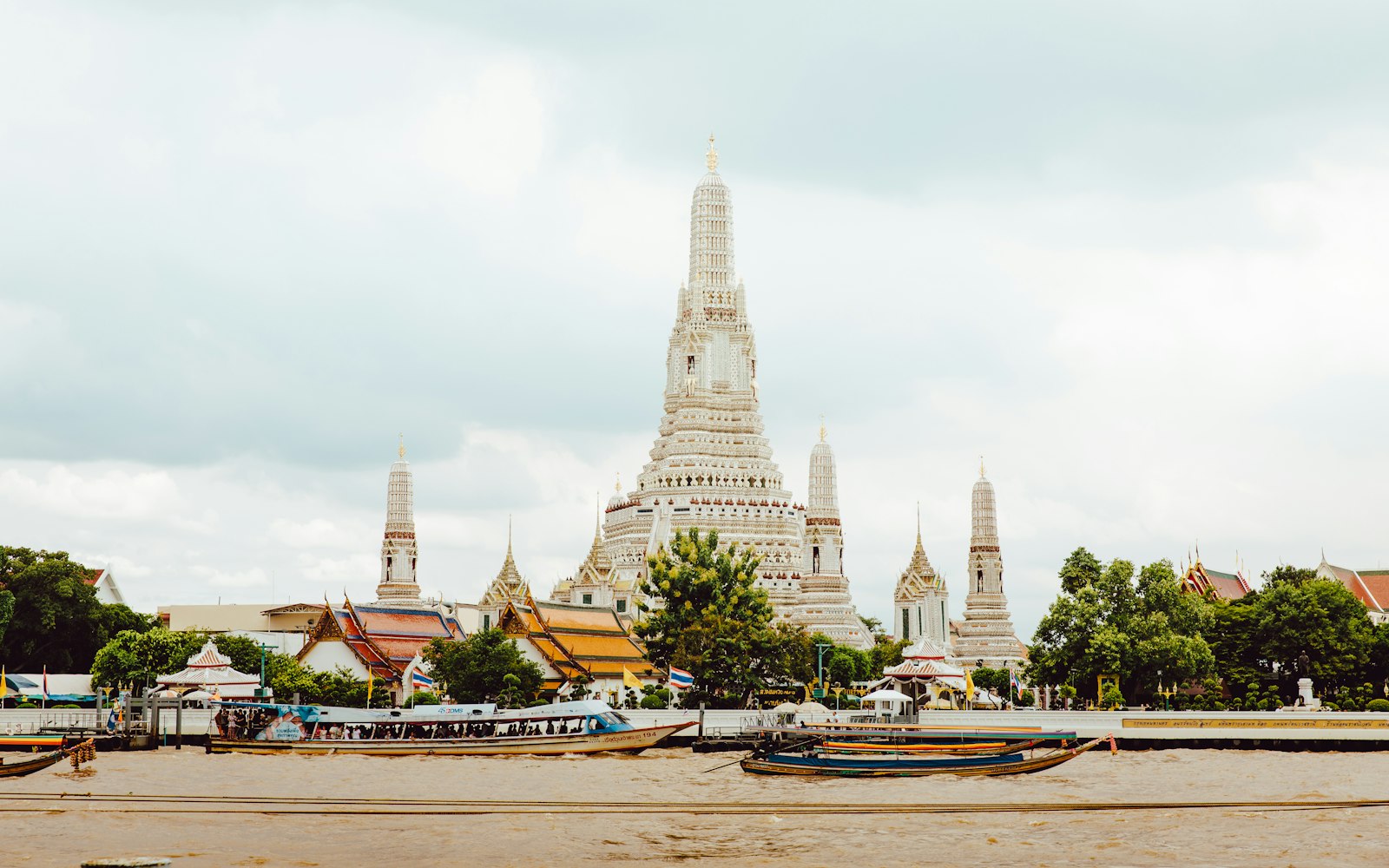
Start in Rattanakosin, the old royal island. The Grand Palace is the showpiece, a dense compound of gold spires and mirrored mosaic sheltering the revered Emerald Buddha. It is dazzling and crowded, so arrive early and dress modestly, shoulders and knees covered, or you will be turned away. A short walk south, Wat Pho is calmer and, to many, more moving, home to an enormous gilded reclining Buddha with soles inlaid in mother-of-pearl. Across the water, Wat Arun, the Temple of Dawn, rises in tiers of porcelain-studded stone that catch the late afternoon light.
The Chao Phraya is the city’s true spine, and its express boats are transport and sightseeing at once: for the price of a cold drink you watch temples, grand hotels, and stilt houses slide past the rail. Behind the river, the khlongs, the old canals that once earned Bangkok the name Venice of the East, still carry longtail boats past waterside homes.
Then there is the food, which may be the real reason to come. After dark, Yaowarat, the main artery of Chinatown, becomes an open-air kitchen of woks, charcoal grills, and plastic stools, thick with charcoal smoke. On the Sukhumvit side, the sois, the lanes off the main road, hide their own carts and counters. Hunt down boat noodles, the dark rich bowls once sold from the canals, and do not leave without mango sticky rice. Our guide to street food across Southeast Asia is a fine place to build an appetite first.
On weekends, Chatuchak is the market that humbles all others, a maze of thousands of stalls selling everything from potted plants to vintage denim. Go early, wear light clothes, and accept that you will get lost, which is half the point. One honest warning: the famous floating markets from the photographs sit mostly outside the city, reached as day trips, and the closest ones can feel staged. Worth a day out, but not a Bangkok neighborhood.
When the day cools, the modern side shows off: the towers of Silom and Sukhumvit are stacked with rooftop bars trading a steep drink price for a long view over the lights. The smarter ones enforce a dress code, so leave the flip-flops behind.
The old capital of Ayutthaya sits a short way up the line, and the slow train there is half the pleasure. Its brick temple ruins and a stone Buddha head cradled in tree roots are the remains of a city that once rivaled any in the world. Check current train times at the station.
Where to base yourself
Where you sleep shapes your trip more than in most cities, because traffic makes crossing town a commitment. Pick one base and stay put, then build your days around what is walkable from it. The main options:
Rattanakosin and the river
The old royal island and the riverside strip west of it. This is where Bangkok began, and you are within walking distance of the Grand Palace, Wat Pho, and the river express boats, with the Sao Ching Cha giant swing and the amulet market for in-between wandering. Slower, more traditional, and quieter after dark than the modern east. The trade is that you are off the Skytrain network, so longer hops mean a taxi, a boat, or a short walk to a station.
Sukhumvit
The modern spine of the city, and the easiest base for first-timers who want comfort, English, and connections. The Skytrain runs right above the road, the malls and the international food are stacked along it, and the lower-numbered sois, the lanes off the main drag, hold everything from cheap guesthouses to high-rise hotels. Loud, busy, and unembarrassed about being a tourist machine, which is a feature if you want an easy landing.
Silom and Sathorn
Just south of Sukhumvit, this is Bangkok’s financial spine, dense with towers by day and surprisingly quiet by night, with the rooftop bars of Sathorn and the street food of Silom’s sois balancing it out. Lumphini Park, the city’s biggest green space, sits at the seam between the two. A good pick if you want a calmer room than Sukhumvit offers without giving up the train.
Chinatown and Talad Noi
Yaowarat and the old quarter around it are where travelers in the know have been heading for a decade. Tight lanes, old shophouses turned into coffee shops and small hotels, and the loudest, smokiest street food in the city once the sun drops. It is loud, gritty, and not for light sleepers, but no other neighborhood puts you so close to the city’s actual texture. Pairs well with a daytime base elsewhere if you want a quiet bed and a loud evening.
Riverside
The grand old hotels along the east bank of the Chao Phraya, with their boat shuttles and polished service, split the difference between the old city and the modern east. A good choice if you want a slow, classic Bangkok stay and are happy to let the river move you around.
Pick the one that matches the trip you actually want, rather than the one a guidebook ranks first. A first-timer who lands at midnight and wants an easy morning usually sleeps better in Sukhumvit; a return visitor chasing atmosphere often picks Chinatown or the river and never regrets it.
What to skip
A few tourist fixtures are worth a second thought. The floating markets on the brochures, Damnoen Saduak in particular, sit well outside the city and lean heavily on staged photo ops; Khlong Lat Mayom or Taling Chan, closer in and still used by locals, are the more honest version if you want the boat-and-market morning. The Ping or Annie massage chains advertised on every Sukhumvit corner are best avoided; a proper Thai massage at a respected spa or a no-frills local shop is a better experience for less money. And the famous Patpong night market trades on its red-light reputation and charges accordingly, with overpriced goods and persistent touts; it is fine to walk through once for the spectacle, but spend your baht elsewhere.
Getting around
Bangkok’s traffic lives up to its reputation, and the trains beat it every time. The elevated BTS Skytrain and the underground MRT are clean, cheap, cool, and fast, and reach most places a visitor wants to go. Where the rails stop, Grab, the region’s ride-hailing app, takes the haggling out of a car, and metered taxis are fine as long as the driver runs the meter. Tuk-tuks, the open three-wheelers, are a genuine Bangkok experience, but for fun and short hops, not value, since the quoted fare usually beats a metered car. For the wider picture on trains, buses, and boats across the region, see our guide to getting around Southeast Asia.
Before you go
Visa rules for Thailand change often and depend on your nationality, so check current official requirements before you book. Temples enforce modest dress, so pack clothes that cover shoulders and knees and shoes that slip off easily. Drink bottled or filtered water, keep small bills on hand for stalls and boats, and build in rest, because heat and humidity on top of jet lag is a heavy load.
Bangkok is also one of the best launchpads in the region. North to Chiang Mai and the northern mountains the tempo drops and the hills begin, and the slow overland route via Ayutthaya and Sukhothai is one of the easiest rail journeys in Southeast Asia. East across the border, Siem Reap and Angkor are a short flight or a long, scenic overland trip away. South, fly on to Singapore for a clean, ordered contrast, or to Penang if it is the food you came for and you want it without the megacity noise.
Bangkok rewards the traveler who keeps saying yes: to the extra dish, the longer boat ride, the wrong turn down a market lane. Come with an open appetite and a loose plan, and the city gives back more than it asks.
Line up the season with our guide to the best months to visit Southeast Asia, then sort transport withgetting around the region.