Hanoi
Vietnam's dense, atmospheric capital: Old Quarter chaos, lake-side calm, and coffee culture. When to go, where to stay, and the day trips worth taking.
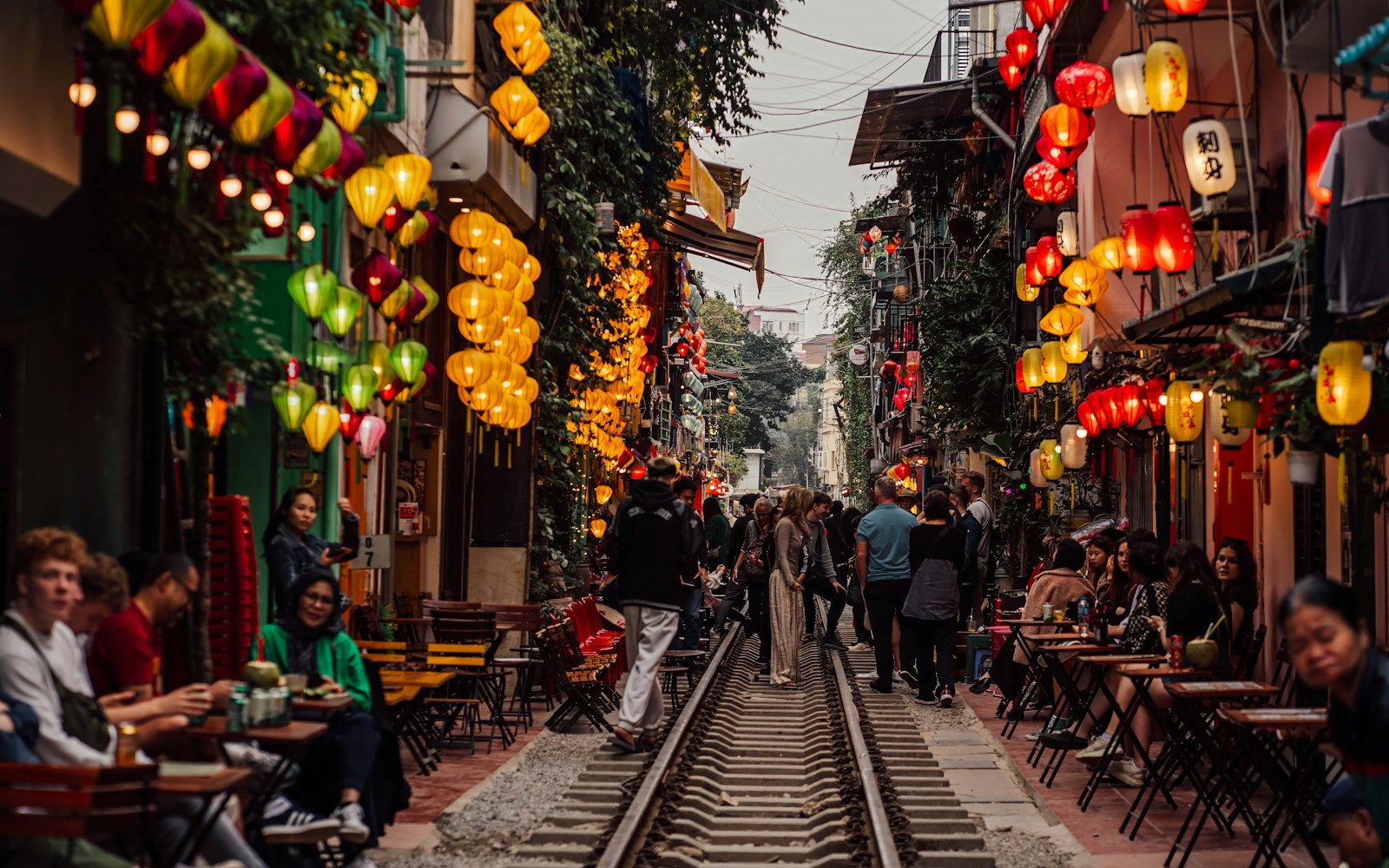
Hanoi does not ease you in. Step out of a taxi into the Old Quarter and the city arrives all at once: motorbikes threaded three abreast, the hiss of a soup pot, a woman balancing baskets of lychees on a bamboo pole, and above it all the tangle of power lines that seems to hold the neighborhood together. It is loud, close, and completely absorbing.
Then you find the lake. Hoan Kiem sits at the heart of the city like a held breath, its water the color of weak tea, its edges softened by willows and old men playing chess. Vietnam’s capital runs on this contrast, between the roar of the streets and these pockets of stillness, and learning to move between the two is most of the pleasure of being here.
When to go
The comfortable window runs roughly October to April, when the air turns cool and dry and the humidity that defines a northern summer finally lifts. This is the season most travelers aim for, and the streets feel their best.
Here is the honest surprise: northern Vietnam has a real winter. Unlike the year-round heat of the tropical south around Ho Chi Minh City, Hanoi can turn genuinely chilly and grey for weeks, with a damp cold that finds its way through a thin jacket. Pack a layer. Summer, by contrast, is hot, sticky, and prone to heavy afternoon downpours, so plan indoor breaks around the worst of the heat.
What to do
Start on foot in the Old Quarter, a medieval maze once organized by trade, where a lane might still sell nothing but tin goods or silk or votive paper. Getting a little lost here is the point. When the noise gets to be too much, walk back toward Hoan Kiem Lake, cross the red bridge to Ngoc Son Temple, or simply sit on a bench and watch the city circle.
South of the lake, the mood shifts. The French Quarter trades chaos for wide, tree-lined boulevards, mustard-yellow colonial facades, and the grand old Opera House. It is a good place to slow your pace and see how the layers of the city stack up.
Then there is the food, reason enough to come. Hanoi is the home of pho, and a bowl here is cleaner and less sweet than its southern cousin. Do not miss bun cha, grilled pork and herbs in a tangy broth, best eaten at a plastic-stool joint at lunch. Grab a banh mi from a cart when hunger strikes, and set aside an afternoon for egg coffee, a Hanoi invention of whipped egg yolk and condensed milk over strong coffee, served in cafes tucked up narrow staircases you would never find without looking. For a wider sense of how these dishes fit the region, our guide to Southeast Asian street food is a useful primer.
In the evening, catch a water puppet show. This is not a tourist invention but a genuinely local art form from the rice-farming villages of the north, where lacquered puppets skim across a pool of water to live music. It is charming, a little strange, and worth an hour.
One more stop draws a crowd: Train Street, a residential lane where the tracks pass close enough to touch the doorframes and cafes serve coffee between trains. Access here opens and closes depending on current safety rules, and the authorities have shut it more than once. Respect any barriers or closures, keep well clear when a train is due, and check the latest situation locally rather than assuming it is open.
Where to base yourself
Your choice comes down to energy versus calm. Base yourself in the Old Quarter and you are inside the action, steps from street food and night markets, at the cost of noise that runs late and starts early. Prefer a gentler landing? Look for a room around Hoan Kiem Lake or just south toward the French Quarter, where the streets are wider, the hotels a touch more polished, and the walk to everything still short. Either way, Hanoi rewards staying central and going out on foot.
Getting around
The motorbike swarm is the first thing you will need to make peace with. Traffic here does not really stop, and waiting for a gap that never comes will strand you on the curb. The trick, which locals use without thinking, is to step off at a steady, predictable pace and keep walking. The riders read your line and flow around you. Do not sprint, do not freeze, and above all do not lunge backward, which is what causes the near-misses.
For longer hops, ride-hailing apps work well and settle the fare in advance, which saves the haggling. Walking, though, is how you will actually see the place.
Day trips worth the effort
Hanoi is the natural gateway to two of the north’s headline experiences. To the east lies Halong Bay, the seascape of limestone karsts rising from jade water, usually done as an overnight cruise so you catch it at dawn before the day boats arrive. To the northwest, the mountain town of Sapa offers terraced rice valleys and hill-tribe villages, better as an overnight than a rushed day given the travel time. Both can be arranged easily from the city.
If you are continuing south afterward, the lantern-lit old town of Hoi An makes a natural next stop and a soft landing after all this motion.
Give Hanoi a few days and its logic reveals itself: the noise and the calm are not opposites but the same rhythm, breathing in and out. Learn to cross the road, find your cafe, and the city stops being overwhelming and starts feeling like somewhere you could stay.
Line up the season with our guide to the best months to visit Southeast Asia, then sort transport withgetting around the region.