The best time to visit Southeast Asia
There is no single best season for Southeast Asia. This guide breaks the monsoons down by country so you land in the dry window, not a downpour.
Ask ten seasoned travelers for the single best month to visit Southeast Asia and you will get ten confident, contradictory answers. That is not indecision. It is geography. The region sprawls across the equator, so while one country is drying out, another is just getting soaked.
The good news is that the weather here becomes legible the moment you stop hunting for one perfect week and start thinking in sub-regions. Pick where you want to go first, then let the map tell you when.
Why there is no single answer
Southeast Asia sits in both hemispheres at once. Northern Thailand is well above the equator, while Bali and much of Indonesia sit below it. Seasons in the two halves run in near opposition, so a date that is glorious in one place can be the wettest stretch of the year a short flight away.
Two monsoon systems drive the calendar. The southwest monsoon pushes moist air across the mainland and the western coasts through the middle of the year. The northeast monsoon later swings the pattern the other way, wetting down eastern coasts that were dry all summer. Add mountains, which wring rain out of the air on one side and leave the other in a rain shadow, and you get the region’s stubborn refusal to have a single season. Plan by sub-region, not by the whole.
Mainland Southeast Asia
Thailand, Cambodia, and Laos share a broadly similar rhythm. The cool-dry stretch, roughly November to February, is the sweet spot: clearer skies, kinder humidity, and comfortable days for temple-hopping around Angkor or slow mornings in Luang Prabang. It is also the busiest and priciest window, so book ahead and expect company at the marquee sites, especially around the winter holidays.
From about March to May the heat builds to something serious, with pre-monsoon afternoons that can flatten you. Then the southwest monsoon arrives, roughly June to October, bringing the rains that green everything up and thin the crowds.
There is one honest catch to the cool-season dream. In the north, roughly March into April, farmers and land managers burn fields and forest, and the smoke settles into the valleys. The haze around Chiang Mai and across northern Laos can turn the air genuinely unpleasant and blot out the mountain views people came for. If big skies matter to you, skip the north in those weeks.
Vietnam, north to south
Vietnam breaks the tidy rules because it is so long. Treat it as three countries stacked on top of each other.
The far north has a real winter. Around Hanoi and up in the mountains near Sapa, the months near the turn of the year can be cool, gray, and even cold enough for a jacket, which surprises first-timers expecting tropical heat everywhere.
The central coast, around Hue, Da Nang, and Hoi An, keeps its own schedule. It tends to stay dry when the north and south are wet, but it carries a real flood risk in the late-year window, often around October and November, when heavy rain can put parts of old-town Hoi An under water for days.
The south, around Ho Chi Minh City and the Mekong Delta, runs on a simpler split: a dry season from about December to April and a wetter stretch the rest of the year. Stringing the whole country together in one trip means you will always be trading one region’s best month for another’s compromise. Decide which stretch matters most and build around it.
Maritime Southeast Asia
The islands flip the mainland’s logic. Bali and much of Indonesia are at their driest and sunniest from about April to October, which is exactly when the mainland is getting drenched. That inversion is the single most useful fact for anyone chaining a longer trip together.
The Philippines runs closer to a November-to-May dry season across much of the country, which is why the beaches and island-hopping boats around El Nido are at their best in the cooler early months of the year. The flip side is typhoon season later on, which is worth taking seriously and worth checking against current forecasts before you commit to remote islands.
Malaysia and Singapore are essentially year-round destinations with no dry season to chase, but they are not uniform. The monsoon splits the coasts: the northeast monsoon soaks the east coast of the peninsula and Borneo late in the year, while the west coast and the islands off it, like Langkawi, stay more reliable. If you are aiming for the Perhentians or Tioman on the east, avoid the late-year wet months.
Shoulder season and the rain myth
The words “wet season” scare people off more than they should. In much of the region, tropical rain is not a gray all-day drizzle. It is a dramatic afternoon downpour that arrives, empties the sky for an hour, and clears, leaving a washed, glowing evening behind. Mornings are often bright. You can travel around it.
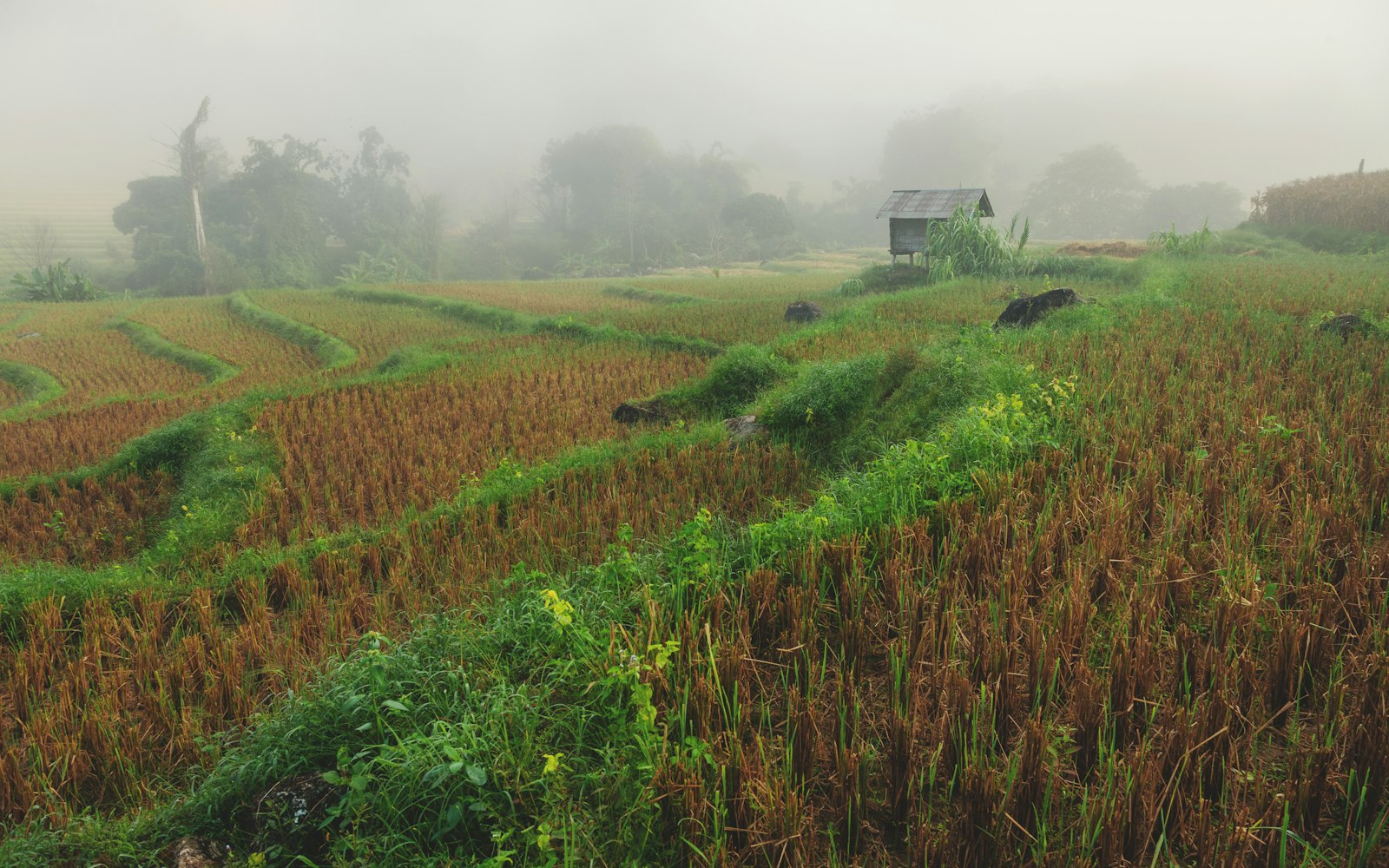
Traveling in the shoulder months, the edges of the wet season, is often the smart play. Prices soften, the crowds at the big sites melt away, the landscape is at its most lush, and rice terraces run green rather than stubbled. You trade the guarantee of dry weather for space, value, and a region that feels less trampled.
There is also a completely different way to choose your dates: ignore the weather and travel for a festival instead. Songkran’s water fights, Bali’s silent day of Nyepi, or the lantern-lit river nights of Loy Krathong can define a trip more than sunshine ever could. Our guide to Southeast Asia’s festivals lays out what happens where, so you can time a visit to the celebration and simply pack for whatever weather comes with it. Just know that festival weeks bring their own crowds and higher room rates.
A month-by-region cheat sheet
Use this as a starting point, not a promise. Microclimates and shifting patterns mean any given year can surprise you, so pair it with a current forecast close to your dates.
| Sub-region | Driest, most comfortable | Wettest or trickiest |
|---|---|---|
| Mainland (Thailand, Cambodia, Laos) | Roughly Nov to Feb | Rains Jun to Oct; northern haze Mar to Apr |
| Northern Vietnam | Around spring and autumn | Cold, gray around midwinter |
| Central Vietnam | Roughly Feb to Aug | Flood risk around Oct to Nov |
| Southern Vietnam | Roughly Dec to Apr | Wetter May to Nov |
| Bali and much of Indonesia | Roughly Apr to Oct | Wetter Nov to Mar |
| Philippines | Roughly Nov to May | Typhoon risk mid to late year |
| Malaysia and Singapore | Year-round, west coast steadier | East coast wet late in the year |
The honest takeaway is that there is no bad time to come, only a wrong pairing of place and date. Choose the corner of the region you most want to see, aim for its dry months if easy weather matters or its shoulder season if value and space do, and let everywhere else wait for another trip. The region is not going anywhere, and neither is its refusal to have a single best month.